
Insights
How to Build Passion at Work: What Self-Efficacy SCIENCE Reveals
Building passion at work starts with understanding self-efficacy — and why it matters more than confidence. Psychologist Albert Bandura's research shows that our belief in our ability to successfully perform a task is one of the key drivers of passion at work. The more evidence we gather that we can learn, adapt and succeed, the more likely we are to develop deep, lasting passion for what we do. Here's what the science says — and what you can do with it.
If we were having coffee, and you asked me how to do more of your best work, here's what I'd say: Stop chasing confidence!
I know, it feels a bit harsh, doesn't it?! Confidence is a beautiful thing; that feeling of lightness, of flow and being ourselves. My intention is not to devalue it.
But, I see many leaders waiting for confidence, like it's always out of their grasp, and it's stopping them from achieving what they truly want.
"Susie is just a better choice for it."
"I'm too old."
"They'll think I'm going backwards."
When we wait to feel confident, we miss chances to build the skills and experiences that helps confidence grow.
In my keynotes, I teach another concept that can help move our brains forward: self-efficacy. Psychologist Albert Bandura gave us this concept – it's a bit of a tongue twister to say, but it's incredibly helpful. Simply put, we start to believe we can do something well by doing it. It might sound like a vicious circle, but research shows it is true: self-efficacy is linked to building passion for our work.
The more we see that we can learn, adapt, and succeed, the more likely we are to go after work that challenges and fulfills us. When we push ourselves, we often find new strengths, new interests, and more passion for our work.
One way I like to think about it is that confidence is often about how we appear to others, while self-efficacy can strengthen us from the inside.
Think about the promotion you’ve delayed, the certification you want to earn, or the project you’re waiting to feel ready for.
Is there a small step you can take to move forward, to prove to yourself that you CAN do it?
Reference:
Bandura, A. (1997). Self-efficacy: The exercise of control. W.H. Freeman.
I’m Laura Best, a motivational keynote speaker and bestselling author. I help organisations activate passion to drive energy, engagement, and performance through my Practical Inspiration® approach. If you’re thinking about how this conversation could support your leaders or teams, you can learn more about my keynote work here.
Fast Company: Fostering this one simple quality can dramatically improve your team’s performance
Read this latest article in “Fast Company” by keynote speaker Laura Best.
Disengagement is expensive, and most organisations know it. A 2025 study in the American Journal of Preventive Medicine estimates that disengagement costs about $5 million a year for every 1,000 employees 1 and that's before accounting for what's harder to measure. Teams deliver — narrowly avoiding burnout — but the creativity, the discretionary effort, the genuine spark of someone who truly cares? That's becoming a rare commodity in today's turbulent working world as AI continues its disruption.
Sure, most AI is exceptional at scale, speed, and synthesis. It learns from what already exists, optimises from the middle, and produces output that is arguably an average of everything that came before it.
What AI cannot do on its own is care. It cannot bring the specific, idiosyncratic passion of a person who is genuinely, deeply invested. It cannot replicate the creativity of a mind that views the world differently, the trust that builds when colleagues show up more openly, or the desire and persistence to solve complex problems.
Passion can be that capability; however, in most organizations it remains untapped, an invisible resource that is being asked to take a back seat.
Passion is the answer, and most organisations are leaving it completely to chance.
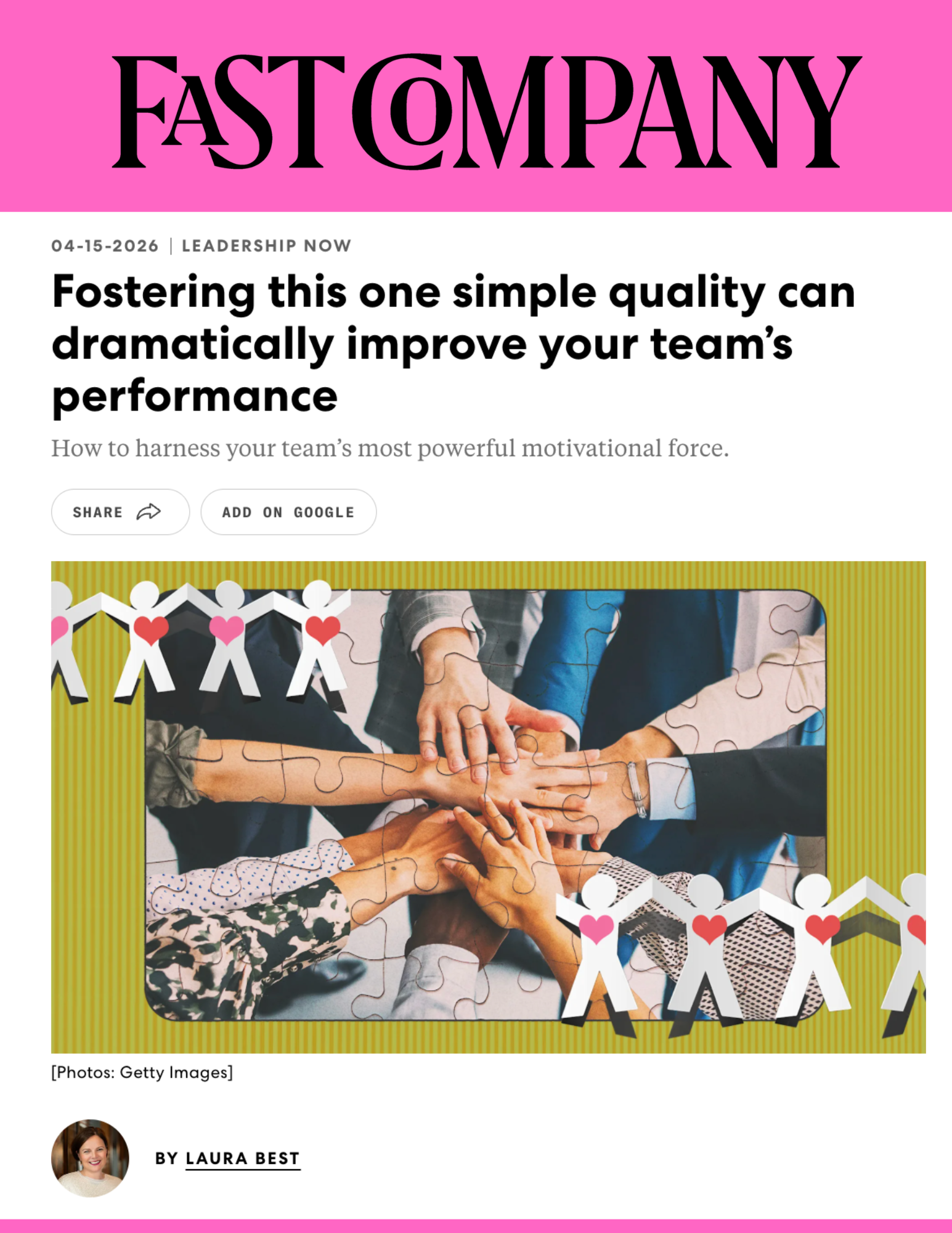
Disengagement is expensive, and most organizations know it.
A 2025 study in the American Journal of Preventive Medicine estimates that disengagement costs about $5 million a year for every 1,000 employees 1 and that's before accounting for what's harder to measure. Teams deliver — narrowly avoiding burnout — but the creativity, the discretionary effort, the genuine spark of someone who truly cares? That's becoming a rare commodity in today's turbulent working world as AI continues its disruption.
Sure, most AI is exceptional at scale, speed, and synthesis. It learns from what already exists, optimises from the middle, and produces output that is arguably an average of everything that came before it.
What AI cannot do on its own is care. It cannot bring the specific, idiosyncratic passion of a person who is genuinely, deeply invested. It cannot replicate the creativity of a mind that views the world differently, the trust that builds when colleagues show up more openly, or the desire and persistence to solve complex problems.
Passion can be that capability; however, in most organizations it remains untapped, an invisible resource that is being asked to take a back seat.
Passion is the answer, and most organisations are leaving it completely to chance.
Bring on the "woo woo".
To business, passion sounds too personal, immeasurable, and weirdly evangelical; the province of spa retreats, not boardrooms.
Yet, the outcomes of passion at work are neither vague nor difficult to prove. When people can bring their passion into their work — in any form, however small — the psychological benefits are well-documented: increased confidence, a stronger sense of identity, deeper social connection, and a greater feeling of belonging. 2
These are not nice-to-haves. They are the conditions under which people do their best work.
The organisational benefits follow directly. Greater trust between colleagues. Richer, more creative collaboration. The kind of shared experience that builds high-performing teams from the inside rather than engineering them from the outside.
Passion is defined as a motivational force, so if an organisation wants to drive positive momentum and results, then it makes sense to tap directly into that fuel.
In practice, it looks like this.*
Mike: Finance Guy, and Holiday Cookie Champ
Mike is a finance guy in a growing professional services firm. His Monday-to-Friday is back-to-back calls, spreadsheets by the mile, and the usual drinking from a firehose. By every professional measure, he is good at his job.
Outside of work, he is a passionate baker, spending his spare time honing his cookie-making skills.
One December, he spent a night baking hundreds of cookies and brought them into the office the following day for everyone to enjoy. His team saw a version of him they had never encountered — creative, skilled in an entirely different way, visibly in his element. New relationships were formed that morning. Trust deepened in ways that months of team meetings had not managed. He felt more fully himself at work than he had in years, and it became an annual tradition, proof that the firm valued individual passions in their quest to be a "best place to work."
Priya: Compliance Leader with a Project Manager's heart
Priya has climbed the corporate ladder to lead a compliance function with skill and commitment, previously spending years in project management. Despite her success, she misses the impact of those days — the knowledge that she was improving her team's lives through the efficiency she created.
Priya didn't want to quit her job. But what if she had the opportunity to join a cross-functional committee, spending several hours per month using her expertise to improve the organisation's systems? That would represent a gain for her and the business, but would only happen if she were brave enough to articulate it to her leader, and if the committee program existed.
Two people. Two different passions. Both have a tangible impact on performance, connection, and culture.
The reason why experiences like these happen is not luck. It's a direct result of leaders building the programs, the openness, and the deliberate culture that nurtures passion every day.
Three ways to cultivate passion
It starts with conversation. A leader who understands their people's passions is being given pure gold – essential information that transcends strengths to what truly makes their team tick. That understanding happens because of consistent, open communication that respects boundaries. It's not so much "how was your weekend?", as "tell me one thing that lit you up this week" and being willing to hear an answer that may not fit in that person's immediate job description.
Secondly, every company needs to walk the walk in formalizing its commitment, whether it's a sabbatical to enable team members to explore their curiosity for new activities, or a new L&D strategy to encourage the sharing and development of passions.
Finally, as with any cultural imperative, when a CEO articulates and demonstrates their own passion — for the work and for what they love outside it — employees feel the freedom to do the same. It starts from the top.
The edge that cannot be copied
In a vanilla-ization of the business world, the differentiators that remain are human.
The specific passions of the people in a team, the curiosity, the craft, the unexpected expertise, the deep investment in something that matters to them, are entirely particular to that organisation. No competitor can replicate them; they cannot be bought in or built overnight. They are already there, in the people who show up every day.
Organisations that learn to see this, name it, and create conditions for it to flourish will have something genuinely difficult to compete with.
Passion as a performance strategy is a deliberate commitment to treat the full humanity of a workforce as the competitive asset it actually is.
*both true stories, but the names have been changed.
Sources:
1. Martinez, M. F., O’Shea, K. J., Lee, B. Y., et al. (2025). The health and economic burden of employee burnout to U.S. employers. American Journal of Preventive Medicine, 68(4), 645–655. Link to abstract.
2. Vallerand: The role of passion in sustainable psychological well-being. Psychology of Well-Being: Theory, Research and Practice 2012 2:1. Link here.
I’m Laura Best, a motivational keynote speaker and bestselling author. I help organisations activate passion to drive energy, engagement, and performance through my Practical Inspiration® approach. If you’re thinking about how this conversation could support your leaders or teams, you can learn more about my keynote work here.
Passion Chats

Passion Chats, hosted by Laura Best, features real stories from Passionados who are pursuing their passions through work, creativity or creating a positive impact for others.
LISTEN IN ON